Color Chemistry & Cuticle Lookbook
Attitudes Hair Studio Archive: Salon Color Chemistry Lookbook
Controlled hair color depends on balancing three measurable variables before a bowl is mixed: cuticle porosity, underlying pheomelanin at target level 1 to 10, and hydrogen peroxide volume (10V to 40V). Built on the historical 1980 to 2020 Langhorne studio archive, this technical edition turns salon formulation into verifiable bench math.
Hair lightens predictably when oxidant strength matches cuticle permeability rather than target speed. Virgin medium-porosity shafts tolerate 20 Vol (6% H2O2) for two levels of lift with a 35-minute processing curve, whereas compromised shafts lifted four levels require staged 20 Vol persulfate sessions paired with bis-aminopropyl disulfide cross-linking to avoid irreversible cysteic acid breakage.
Porosity, Underlying Pigment & Developer Formulator
Zero-Telemetry Client CalculatorThree-level lift requires high-alkaline swelling; monitor elasticity every 10 minutes.
Oxidative Lift vs. Acidic Keratin Smoothing Reference Table
Salon chemical failures most often arise when alkaline oxidative color services collide with acidic aldehyde or glyoxylic smoothing coats without an adequate pH recovery window. The reference matrix below summarizes pH boundaries, cuticle mechanics, and safe spacing intervals.
| Chemical Service | Operating pH | Cuticle & Bond Mechanism | Tensile Delta | Safe Re-Service Interval |
|---|---|---|---|---|
| Persulfate Bleaching | pH 9.5 - 10.8 | Rapid alkaline swelling; oxidizes eumelanin and cleaves 15-30% S-S bonds | -18% to -32% | 14 days before keratin; immediate acidic gloss allowed |
| Acidic Demi-Permanent Gloss | pH 5.8 - 6.8 | Near-isoelectric tone deposit; minimal swelling, compacts outer imbrications | +2% to +5% | Safe same day after lightening; wait 7 days post-keratin |
| Glyoxylic Keratin Smoothing | pH 1.8 - 2.6 | Acyl-cross-linking under 190-230 C thermal iron; hydrophobic F-layer film | +4% rigidity | Wait 30-45 days before any alkaline peroxide lift |
| Thioglycolate Alkaline Perm | pH 8.8 - 9.4 | Reductive S-S cleavage followed by H2O2 re-oxidation around rod geometry | -14% to -24% | Wait 14-21 days before oxidative color; incompatible with >30% bleach |
Hair Cuticle & Cortex Cross-Section Morphology
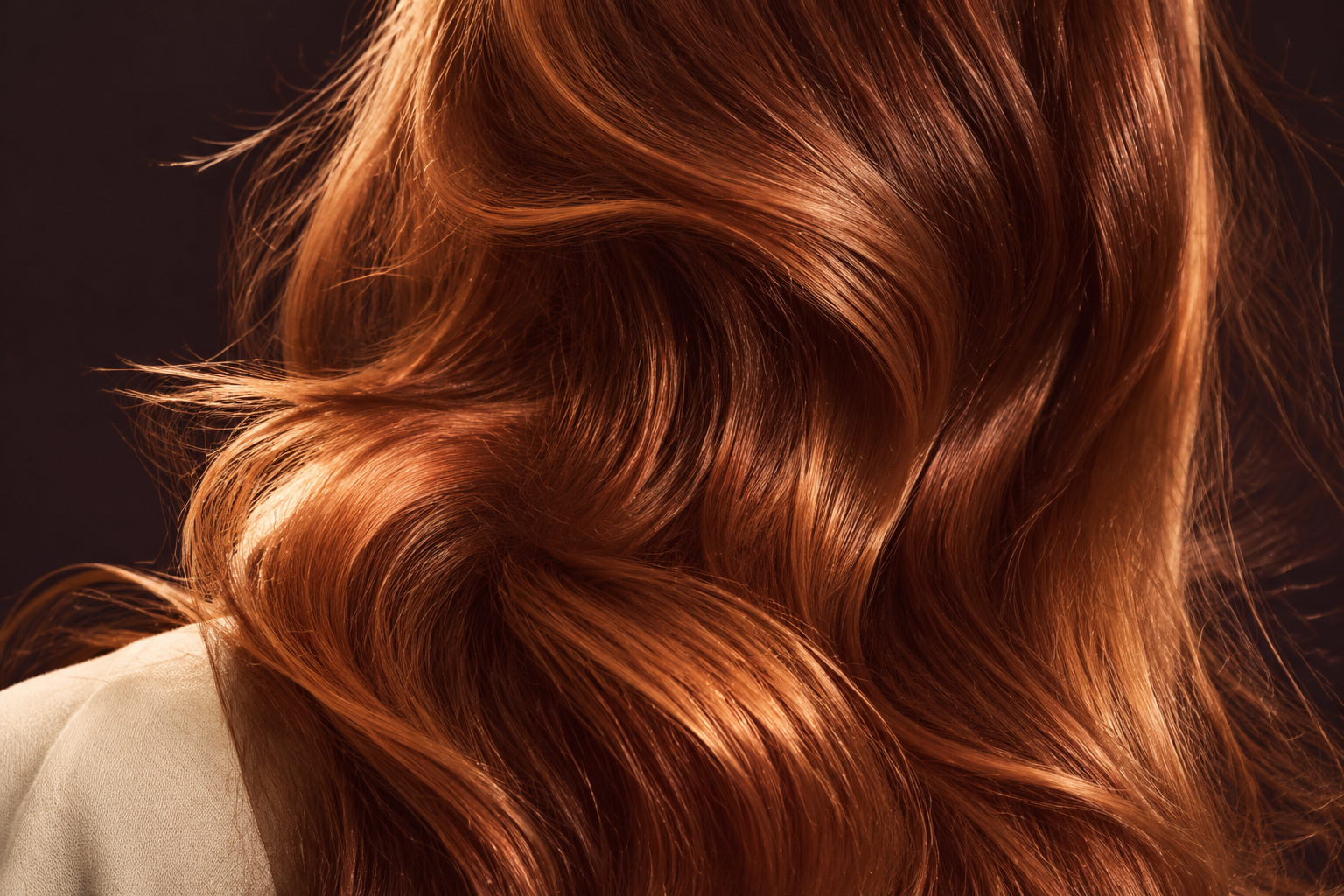
The outer cuticle consists of six to ten overlapping flat keratinized cells sealed by an 18-methyleicosanoic acid (18-MEA) lipid monolayer. Alkaline color swells cortical water channels to expose melanin granules, whereas acidic finishers restore scale flatness and specular copper or brunette light reflection.
Technical Monograph Index
Developer & Underlying Pigment Formulator
Full 10-level pheomelanin exposure map, 10V to 40V peroxide selection rules, and gray coverage alkaline buffering.
Cuticle Porosity & Disulfide Bond Chemistry
18-MEA lipid integrity, ammonia versus monoethanolamine swelling curves, and bis-aminopropyl bond cross-linking.
Bleach, Demi-Gloss & Keratin Compatibility Matrix
Three-line quantitative comparison and interactive service-sequencing interval checker for salon treatments.
Editorial Cut & Curl Architecture Geometry
Helical curl radius physics, internal Carve-and-Slice bulk management, and cobalt shear bevel preservation.
Langhorne Studio Heritage (1980 to 2020)
Historical chronicle of 101 E Maple Ave, disulfide perm testing heritage, and preserved Wayback citations.
Frequently Asked Formulation Questions
What developer volume should you use on high-porosity hair?
High-porosity or chemically compromised hair should stay within 6 Vol to 20 Vol hydrogen peroxide rather than 30 Vol or 40 Vol. Lower oxidant concentration slows alkaline swelling and limits irreversible cysteic acid formation in the cortex.
Reference: Cuticle Porosity & Disulfide Chemistry and PubMed hair oxidative damage studies.
How long must hair rest between bleaching and keratin smoothing?
Wait 10 to 14 days after persulfate lightening before applying acidic glyoxylic keratin smoothing, and wait 30 to 45 days after keratin sealing before performing any alkaline oxidative lift.
Reference: Bleach, Gloss & Keratin Compatibility Matrix.
Archival Note: Preserved Domain Context for attitudeshairstudiolanghorne.com
This publication is an independent salon color chemistry and hair morphology technical archive preserving historical web references to the former Attitudes Hair Studio in Langhorne, Pennsylvania (1980 to 2020). Full entity and non-impersonation details are documented in the Historical Disclosure.